
EuSARC conference offered a great insight into cutting-edge developments in sarcoma biology, translational research, and clinical treatment strategies
As a doctoral researcher at the University of Helsinki, my work focuses on Osteosarcoma (OS) biology including the identification of new drugs for treating OS, the role of the tumor microenvironment, hypoxia and therapeutic vulnerabilities. EuSARC is one of the leading scientific meetings dedicated to sarcoma research and therefore directly aligned with my doctoral studies.
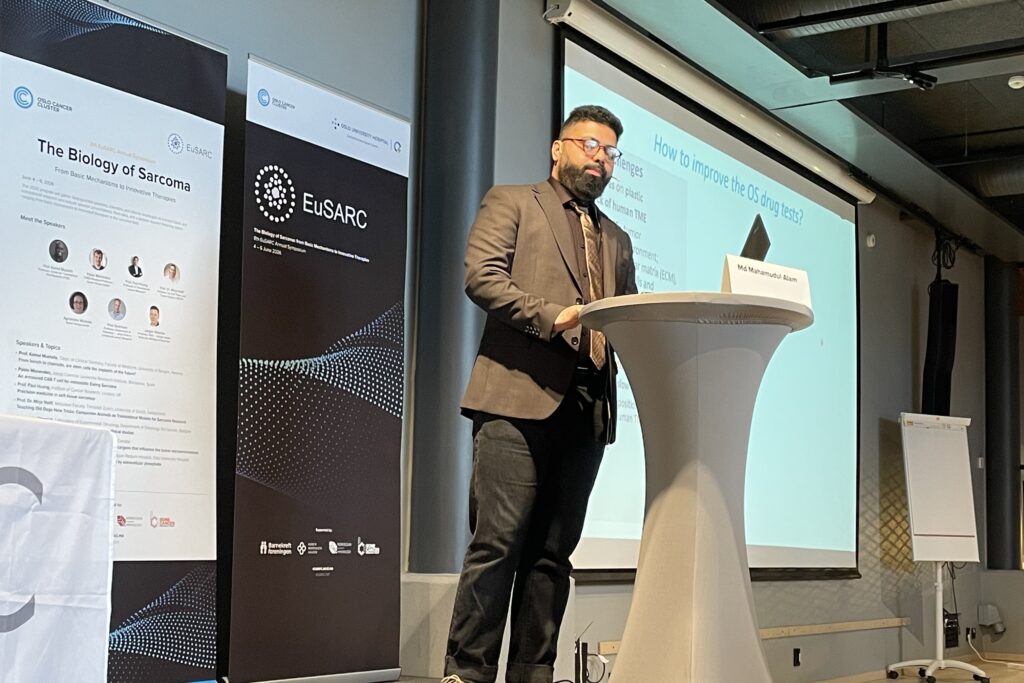
Participating in the conference allowed me to gain insight into cutting-edge developments in sarcoma biology, translational research, and clinical treatment strategies. It also provided an excellent platform to discuss my own research with experts from around the world. That way I received valuable feedback that will help shape the future direction of my work.
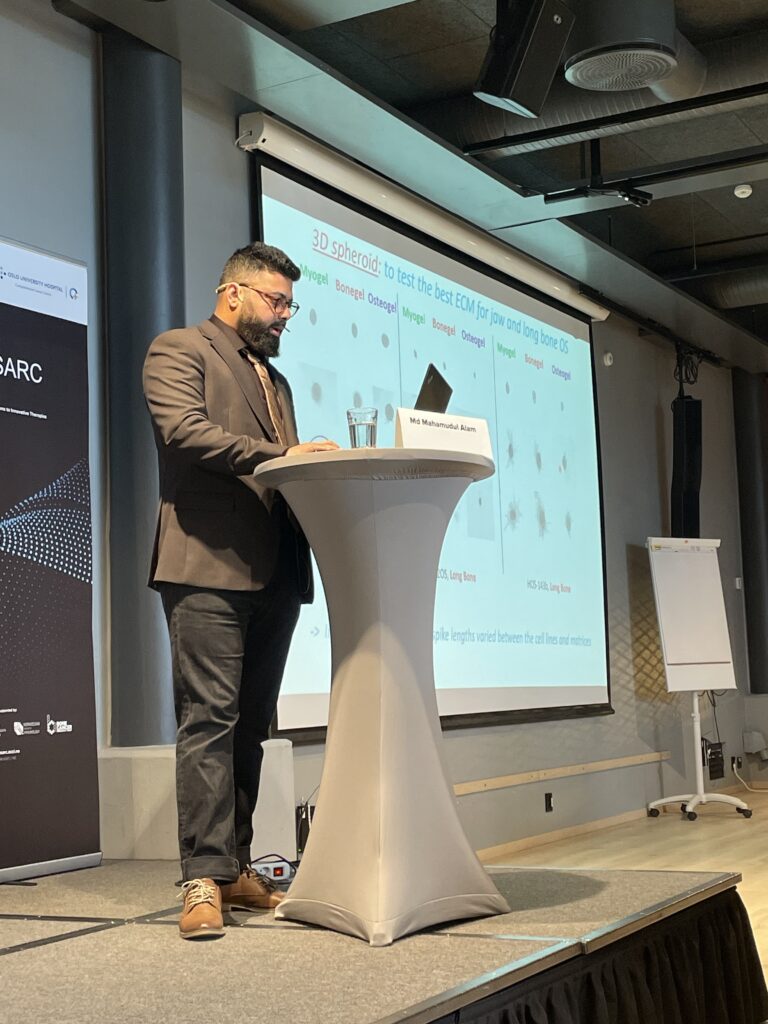
During the conference, I had the privilege of presenting both an oral presentation and a scientific poster. Presenting my work in these formats allowed me to communicate my findings to an international audience and engage in stimulating discussions with fellow researchers.
Interesting Takeaways from the Scientific Sessions
One of the most valuable aspects of the conference was learning how rapidly the field is advancing through the integration of molecular biology, genomics, and precision medicine. Several presentations highlighted how comprehensive molecular profiling is improving the classification of sarcomas and helping identify novel therapeutic targets.
Another important topic discussed throughout the meeting was the role of the tumor microenvironment in sarcoma progression and treatment response. Many researchers presented evidence showing that interactions between tumor cells and their surrounding environment can significantly influence therapeutic outcomes. These discussions were particularly relevant to my own research interests, which focus on understanding how microenvironmental conditions such as hypoxia affect osteosarcoma biology.
I was also fascinated by emerging research exploring new approaches to target treatment-resistant sarcomas. Advances in immunotherapy, epigenetic therapies, and combination treatment strategies demonstrated the growing potential for more effective and personalized treatments in the future.
Most Significant Scientific Insight
The biggest ”aha moment” for me was learning about the role of pet dogs as translational models for sarcoma research. Although sarcomas are rare in humans, they occur much more frequently in dogs. Dogs share many biological and molecular characteristics with their human counterparts. This makes canine sarcomas a valuable model for studying disease mechanisms and developing new treatment strategies. The presentation highlighted how comparative oncology can help overcome some of the challenges associated with the rarity of sarcomas in humans and accelerate progress in precision medicine.
Close collaboration is essential for scientific progress
The most important lesson I learned from the conference was that meaningful progress in sarcoma research depends on close collaboration between basic scientists, translational researchers, and clinicians. The most impactful discoveries emerge when laboratory findings can be effectively translated into clinical applications that benefit patients.
EuSARC 2026 demonstrated the value of international collaboration and multidisciplinary research in addressing the challenges posed by rare cancers such as osteosarcoma. The knowledge, feedback, and professional connections gained during this meeting will undoubtedly contribute to the advancement of my doctoral research and future scientific career.
Interactions with leading experts in the field
A major benefit of attending EuSARC was the opportunity to meet and interact with internationally recognized experts whose work has significantly influenced sarcoma research. Through scientific discussions during poster sessions, networking events, and presentations, I was able to exchange ideas with researchers whose publications have shaped current understanding of sarcoma biology and treatment.
These interactions provided valuable perspectives on current challenges in the field and potential future research directions. Speaking directly with leading scientists also helped me better understand how my own work fits within the broader sarcoma research landscape and highlighted opportunities for future collaborations.
I am sincerely grateful to Vilja Linnea’s Sarcomafund for supporting my participation in the EuSARC 2026 meeting held in Oslo, Norway. The conference provided an exceptional opportunity to engage with the international sarcoma research community, present my own research findings, and learn about the latest scientific advances in the field. The experience was both scientifically enriching and professionally inspiring, and it will have a lasting positive impact on my research journey.
EuSARC and its organization
EuSARC 2026 was held in Oslo, Norway and the meeting was organized by Sebastien Wälchli and his colleagues at the Scandic Holmenkollen Park Hotel, Oslo, Norway (4-6 June 2026). With more than 100 participants, this meeting provided high quality scientific discussions based on 58 communications, including posters, through different topics in the sarcoma field.
The meeting brought together researchers, clinicians, pathologists, surgeons, and industry representatives working in the field of sarcoma research and treatment. The meeting was organized with the aim of fostering collaboration between basic scientists and clinical researchers to accelerate progress in understanding and treating sarcomas.
Please, read also these related articles:
A Meaningful Final Conference Experience at EuSARC 2026
Vuosittain noin viisikymmentä luusyöpädiagnoosia