
A Meaningful Final Conference Experience at EuSARC 2026
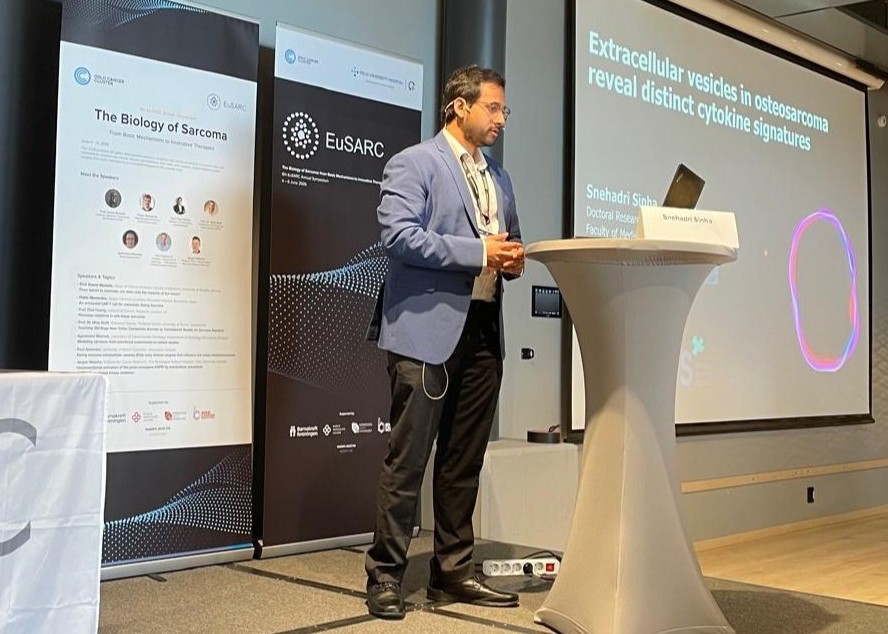
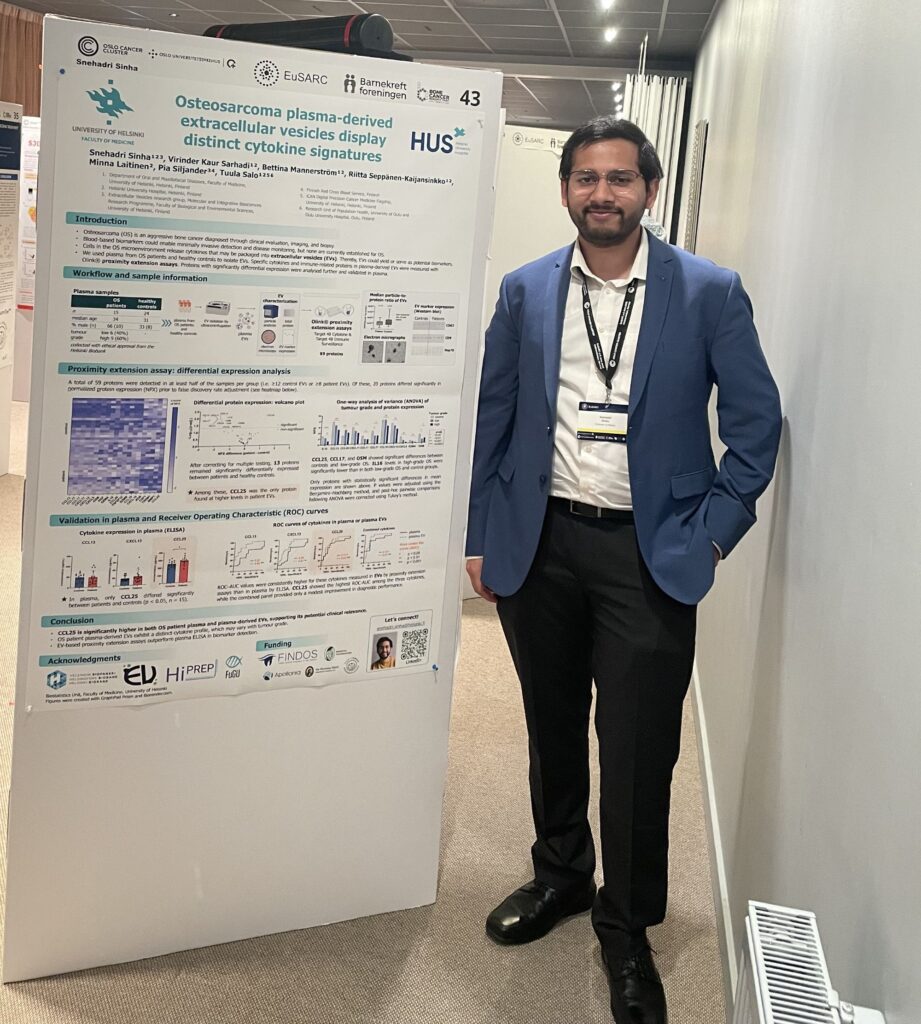
”As I’m approaching the final stage of my doctoral studies, I was eager to present my research at EuSARC, an annual conference dedicated to sarcoma research. Osteosarcoma is a central focus of my dissertation, which explores extracellular vesicles (small particles released by all cells) and their roles in tumour biology as well as their potential as carriers of diagnostic biomarkers. EuSARC is therefore highly relevant to my research area,” tells Snehadri Sinha.
The role of the mesenchymal stem cells
A key takeaway from the keynote lecturer Prof. Kamal Mustafa’s talk was the importance of using mesenchymal stem cells (MSCs) derived from bone marrow when studying bone-related disorders, as opposed to MSCs from other sources.
He also showcased promising developments in 3D-printed scaffolds for bone regeneration.
Prof. Kamal Mustafa is the head of the Centre for Translational Oral Research and leader of the Tissue Engineering research group at the University of Bergen. He is an internationally recognized expert in bone tissue engineering and regeneration and has also collaborated with my research group earlier.
Closer collaboration between the whole bone cancer community is needed
One of the most impactful moments of the conference was hearing directly from an osteosarcoma patient, who shared his personal journey and experiences with the disease. The story was both inspiring and eye-opening, highlighting the challenges patients face and the areas where current care practices still leave much to be desired.
Prof. Alison Gartland, Professor of Bone and Cancer Biology at the University of Sheffield, UK, and a trustee of the UK-based Bone Cancer Research Trust, emphasized the importance of patient and public involvement in research, advocating for closer collaboration between the whole bone cancer community, including scientists, patients, families, and friends, to help shape research proposals and study designs.
Since 2021, the Bone Cancer Research Trust has prioritized funding research proposals that incorporate such involvement, an initiative I view as a meaningful step toward more impactful medical research.
Osteosarcoma research conducted in canine models
Among the scientific presentations, I found it particularly interesting to hear about osteosarcoma research conducted in canine models, as well as the challenges researchers face in justifying their use alongside human studies. This resonated with me, as my own research group previously explored canine models for osteosarcoma but could not continue due to practical limitations.
Networking opportunities are important
I enjoyed the opportunities to interact with fellow PhD students and early-career researchers, including those working in industry. As this was my third time attending EuSARC during my doctoral studies, it was especially nice to reconnect with familiar researchers from previous meetings.
Next year the conference is in London
This was the 8th edition of EuSARC, held this time in Oslo, Norway from 4-6 June. The conference was very well organized by Dr. Sébastien Wälchli and his team at Oslo University Hospital, with support from a Europe-wide scientific committee of leading sarcoma researchers. The program offered a stimulating mix of scientific talks, clinical perspectives, and networking opportunities.
EuSARC 2027 will be held in London, UK in early June.
I am deeply grateful to the Vilja Linnea’s Sarcomafund for their generous travel support, which made it possible for me to attend this year’s meeting.
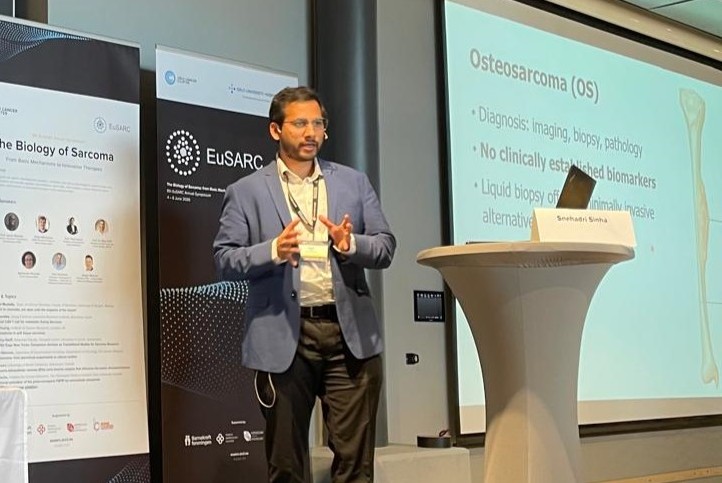
The writer of this article, Snehadri Sinha, is a doctoral student at the University of Helsinki. His doctoral dissertation explores extracellular vesicles (small particles released by all cells) and their roles in tumour biology as well as their potential as carriers of diagnostic biomarkers.
Snehadri received Vilja Linnea’s Sarcomafund’s travel grant in January 2026. He attended the EuSARC 2026 meeting held in Oslo, Norway, in early June.